
As businesses prepare for 2027, technology expenses are becoming an increasingly important part of financial planning. Between cybersecurity threats, rising software subscription costs, aging equipment, and the growing adoption of artificial intelligence, keeping IT spending under control isn’t always easy.
For many small and midsize businesses, IT budgeting is still largely reactive. Something breaks, a computer needs replacing, or a software renewal comes due, and the expense gets added to the budget.
Unfortunately, this approach often leads to unexpected costs, unnecessary purchases, and missed opportunities to improve efficiency.
A smarter IT budget isn’t necessarily about spending less. It’s about knowing where your money is going, anticipating future needs, and making sure your technology investments support your business.
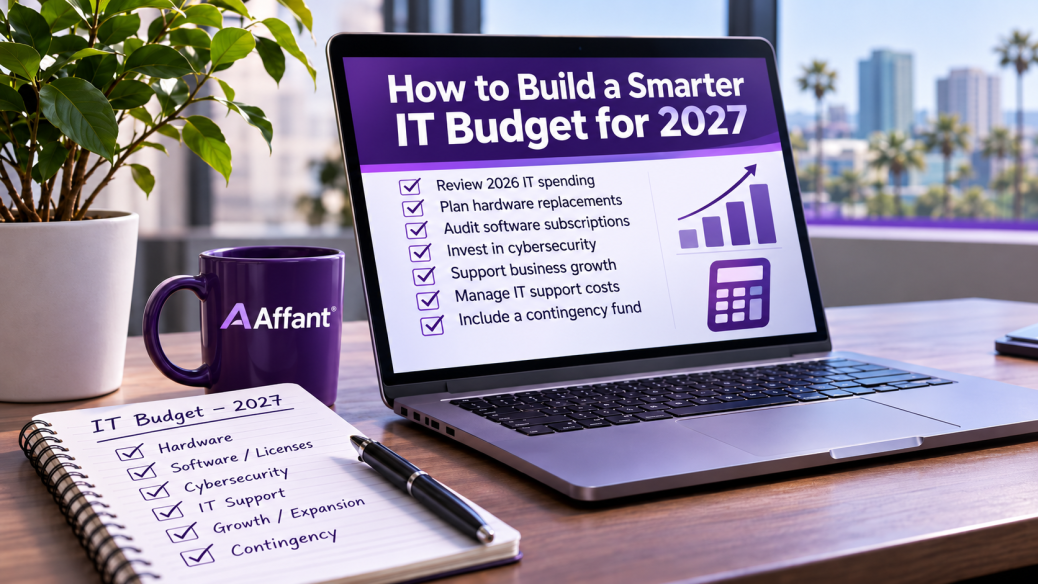
Here are seven ways to build a more effective IT budget for 2027.
1. Start by Reviewing What You Actually Spent in 2026
Before setting next year’s IT budget, take a close look at your current expenses.
Many businesses underestimate how much they’re spending on technology because costs are spread across multiple departments, vendors, and subscriptions.
Start by reviewing expenses such as:
- Hardware: Computers, servers, networking equipment, printers, and replacement parts.
- Software: Microsoft 365, cloud applications, security tools, and industry-specific programs.
- IT support: Managed services, consulting, emergency repairs, and hourly support.
- Cybersecurity: Endpoint protection, backups, email security, and compliance tools.
- Cloud services: Data storage, hosting, virtual servers, and cloud-based infrastructure.
- Unexpected expenses: Emergency replacements, downtime-related costs, and unplanned upgrades.
Look for recurring expenses that have increased, services that are no longer necessary, and problems that required repeated spending.
This gives you a realistic starting point rather than simply increasing last year’s budget by an arbitrary percentage.
2. Identify Technology That May Need Replacing
One of the biggest budgeting mistakes businesses make is waiting until equipment fails before replacing it.
Aging computers, servers, and network infrastructure can become increasingly expensive to maintain. They may also create performance problems, security vulnerabilities, and unexpected downtime.
Instead of replacing equipment only when it stops working, create a hardware replacement schedule.
For example, many businesses plan to evaluate employee computers after approximately three to five years, depending on their performance, warranty coverage, and operational requirements.
Servers and networking equipment may have different replacement schedules based on their usage and manufacturer support.
Your 2027 budget should account for equipment approaching the end of its useful life.
Planning these expenses allows you to spread purchases throughout the year rather than dealing with several expensive failures at once.
3. Take a Closer Look at Software Subscriptions
Subscription-based software has made business technology more accessible, but it has also made recurring expenses harder to track.
A company might have dozens of subscriptions renewing monthly or annually, sometimes without anyone reviewing whether they’re still needed.
Microsoft 365 is a common example.
Businesses may be paying for licenses assigned to former employees, premium features that aren’t being used, or overlapping applications that perform similar functions.
Before renewing contracts for 2027, review:
- How many licenses are currently assigned and actively used.
- Whether employees are on the appropriate subscription tiers.
- Which applications provide meaningful business value.
- Whether multiple platforms offer overlapping functionality.
- When contracts renew and whether pricing or terms will change.
Even relatively small subscription savings can add up over an entire year.
A knowledgeable IT provider can help identify unnecessary expenses without eliminating tools employees depend on.
4. Make Cybersecurity a Planned Expense, Not an Emergency Purchase
Cybersecurity should be a dedicated part of your IT budget, not something addressed only after an incident.
Small and midsize businesses face many of the same cyber threats as larger organizations, often with fewer internal resources to manage them.
For 2027, consider budgeting for protections such as:
- Multifactor authentication and identity security.
- Endpoint detection and response.
- Email filtering and phishing protection.
- Secure, regularly tested backups.
- Security awareness training.
- Vulnerability management and software updates.
- Incident response and disaster recovery planning.
The right investments will depend on your business, industry, and existing security measures.
Businesses with compliance requirements, such as HIPAA or CMMC, may also need additional resources for assessments, documentation, monitoring, and technical safeguards.
The goal isn’t to purchase every security product available. It’s to identify your most significant risks and invest in protections that meaningfully reduce them.
5. Budget for Growth, Not Just Maintenance
Your IT budget should reflect where your business is going, not just where it is today.
Are you planning to hire additional employees in 2027? Open another office? Introduce new software? Move more systems into the cloud?
Each of these decisions can affect your technology requirements.
For example, expanding your workforce may mean purchasing additional computers, software licenses, security tools, and support capacity.
Opening a new location could require networking equipment, internet connectivity, wireless infrastructure, and secure access to company resources.
Businesses exploring AI tools should also consider subscription costs, employee training, data security, and integration with existing systems.
By discussing business plans with your IT provider ahead of time, you can identify upcoming expenses before they become urgent.
6. Reduce Unpredictable IT Support Costs
One of the challenges with traditional break-fix IT support is that expenses often arrive at the worst possible time.
When a server fails or the network goes down, businesses may face emergency service charges, replacement equipment costs, and lost productivity.
These expenses can make budgeting difficult.
Managed IT services offer an alternative by providing ongoing support, monitoring, maintenance, and other agreed-upon services for a predictable recurring fee.
Instead of relying entirely on emergency repairs, businesses can take a more proactive approach to maintaining their technology.
A managed services agreement can make certain IT support expenses easier to forecast while helping identify potential problems before they cause major disruptions.
However, it’s important to understand what’s included in the agreement.
Hardware purchases, major projects, software licensing, and certain emergency services may be billed separately.
Reviewing these details in advance helps prevent surprises later.
7. Leave Room for Unexpected Expenses
Even the most carefully planned IT budget can’t anticipate every problem.
Hardware can fail unexpectedly. Software vendors may change their pricing. New security threats can require additional protections.
That’s why it’s important to include a contingency fund in your 2027 IT budget.
The appropriate amount will vary depending on your infrastructure, risk exposure, and available financial resources.
Businesses with aging equipment or limited redundancy may need a larger reserve than those with newer systems and comprehensive support agreements.
A contingency fund helps ensure that unexpected technology expenses don’t interfere with other important business priorities.
Your 2027 IT Budget Should Be a Business Strategy
A good IT budget does more than account for computers, software, and technical support.
It helps your business operate efficiently, protect important information, reduce downtime, and prepare for growth.
The key is shifting from reactive spending to proactive planning.
That means understanding your current expenses, identifying potential risks, creating realistic replacement schedules, and working with an IT partner who understands your business goals.
Make Your 2027 IT Budget Work Harder With Affant
At Affant, we understand that businesses need reliable technology without unnecessary expenses or unpredictable support costs.
Our managed IT services help businesses throughout Orange County, Los Angeles, and Southern California take a proactive approach to technology management.
From ongoing IT support and cybersecurity to infrastructure planning and strategic guidance, our team helps businesses make informed technology decisions while keeping costs manageable.
Whether you’re looking to reduce recurring expenses, prepare for growth, or replace an IT provider that isn’t meeting your needs, Affant can help you develop a smarter approach to IT.
Planning your 2027 IT budget?
Contact Affant today to learn how our managed IT services can help you control costs, reduce unexpected expenses, and prepare your business for the year ahead.