
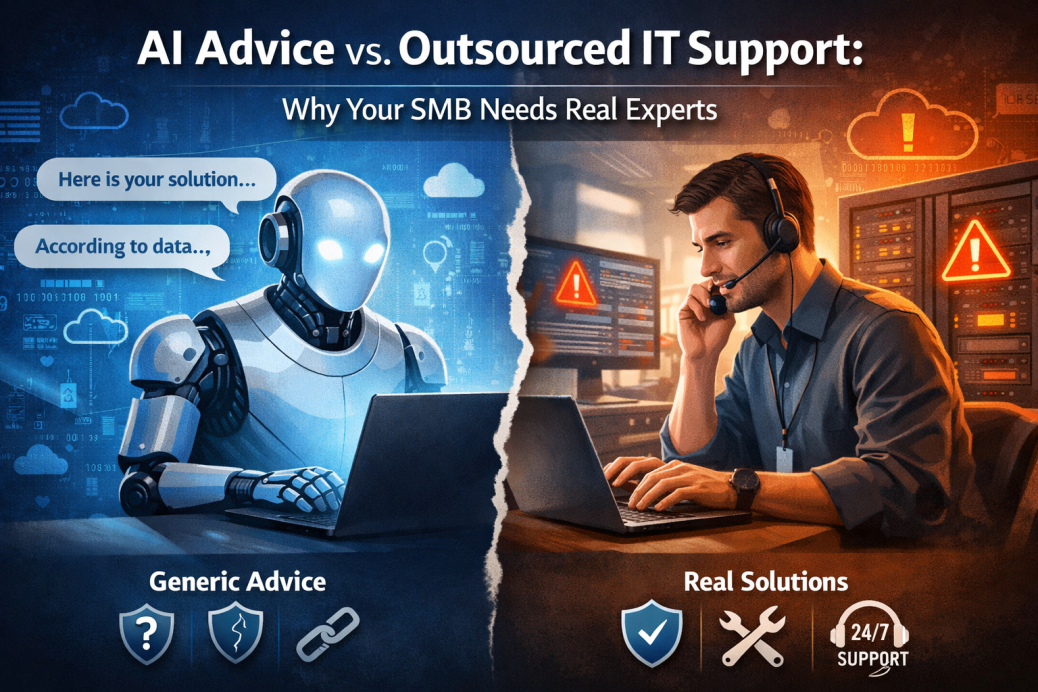
Small and mid-sized businesses are under constant pressure to move faster, reduce costs, and make smart technology decisions. With the rise of tools like ChatGPT, Google Gemini, and Microsoft Copilot, it’s easy to see the appeal of using AI as a substitute for IT expertise.
You ask a question, you get an answer instantly. No waiting, no contracts, no overhead. On the surface, it feels efficient. But when those answers start influencing real infrastructure, security, and compliance decisions, the downsides become harder to ignore.
Confidence Without Awareness
The core issue isn’t that LLMs are useless. It’s that they’re unaware. They generate responses based on patterns, not real understanding of your business. That means they can give answers that sound precise and authoritative while missing critical details specific to your environment.
In an SMB setting, those missing details matter. Your systems aren’t generic. They’ve evolved over time, often with a mix of legacy tools, newer cloud platforms, and one-off configurations that keep things running. AI doesn’t see that complexity. It assumes a clean, ideal setup and responds accordingly.
That gap between “ideal” and “real” is where problems start. A recommendation that looks perfectly reasonable on paper can create security holes, break integrations, or introduce instability when applied to an actual environment.
Real Environments Require Real Context
Most SMB IT environments are not built from scratch with perfect planning. They’re layered over time. Maybe a file server was never fully migrated. Maybe permissions were adjusted informally to keep operations moving. Maybe a backup system exists, but no one has tested a full restore in years.
An LLM has no way of uncovering any of that. It answers the question it was given, not the situation behind it. There’s no discovery process, no validation, no follow-up unless you already know what to ask.
A live outsourced IT team approaches things differently. They don’t just respond. They investigate, ask questions, and build an understanding of how your systems actually behave. That context changes everything. It turns generic advice into decisions that work in practice, not just in theory.
Compliance Is Not a Summary Exercise
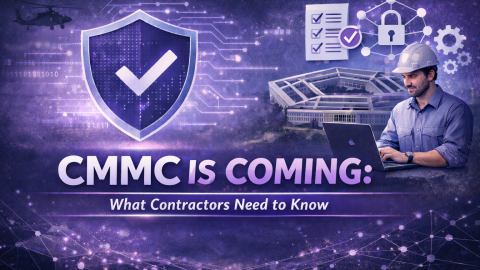
For businesses dealing with regulations like HIPAA or CMMC, the difference between “understanding the rules” and “being compliant” is significant.
LLMs are good at summarizing frameworks. They can explain requirements in plain language and point out common controls. What they can’t do is evaluate your actual systems against those requirements or identify where you fall short. They don’t prepare you for audits, and they don’t take responsibility if something is missed.
That lack of accountability is where the real risk sits. Compliance failures aren’t theoretical. They result in lost contracts, fines, and reputational damage. Businesses need more than explanations. They need verification, documentation, and ongoing oversight.
Speed Without Judgment
One of the biggest advantages of AI is speed. But in IT, speed without judgment can create more problems than it solves.
A quick answer might lead to a firewall change that unintentionally exposes a service. It might suggest a backup approach that looks complete but misses critical data. It might recommend a configuration that works in isolation but conflicts with something already in place.
These aren’t dramatic, obvious failures. They’re subtle issues that surface later, often at the worst possible time. The cost of fixing them usually outweighs whatever time was saved upfront.
A real IT team slows down where it matters. They validate assumptions, test changes, and think through the downstream impact. That layer of judgment is what prevents small decisions from turning into larger incidents.
No Ownership, No Continuity
Another limitation of LLMs is the lack of continuity. Every interaction is effectively a reset unless you manually recreate context. There’s no long-term memory of your systems, your past issues, or the decisions that have already been made.
That means no ownership. If something goes wrong based on AI guidance, there’s no one to call, no one to fix it, and no one accountable for the outcome.
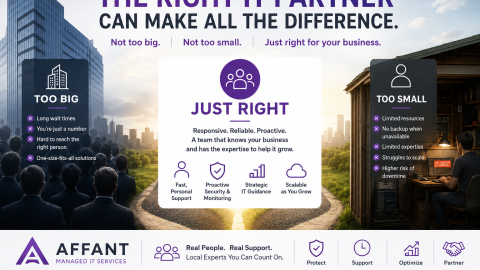
Working with a provider like Affant is the opposite of that experience. Over time, a real team builds familiarity with your infrastructure, your users, and your risks. They recognize patterns, prevent recurring issues, and take responsibility when something needs attention. That continuity is what keeps systems stable as they evolve.
When It Actually Matters
The difference between AI advice and a real IT partner becomes most obvious when something breaks. Systems go down, users get locked out, alerts start firing, and business operations are impacted.
At that point, explanations aren’t helpful. You need action. You need someone who can access systems, diagnose the issue, coordinate fixes, and communicate clearly while it’s happening.
AI can’t do that. It can suggest possibilities, but it can’t take control of the situation. A live IT team can.
AI Has a Place, But It’s Not the Role You Think
LLMs are valuable tools. They can help clarify concepts, assist with documentation, and speed up low-risk tasks. Used correctly, they make teams more efficient.
The mistake is treating them as a replacement for expertise instead of a supplement to it.
Businesses that rely entirely on AI for IT guidance often don’t notice the risk right away. Things seem fine until a decision has unintended consequences. By then, the cost of correction is already higher than the cost of doing it right the first time.
The Bottom Line
Using AI for IT advice can feel like a shortcut, but it often shifts risk in ways that aren’t immediately visible. Without context, accountability, or real-world validation, even good-sounding answers can lead to bad outcomes.
A managed IT partner brings something fundamentally different. Real context, real judgment, and real responsibility. Not just answers, but outcomes.
For SMBs that depend on their systems to operate and grow, that difference isn’t subtle. It’s the difference between guessing and knowing.