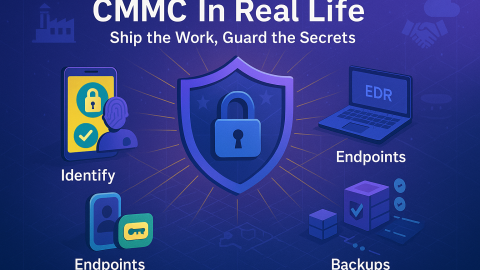


Cybersecurity requirements for defense contractors have officially moved from future planning into present day reality. The Cybersecurity Maturity Model Certification framework is no longer optional, and the upcoming deadlines in 2026 will determine which companies remain eligible for Department of Defense contracts.
This article explains what the CMMC deadlines mean, why waiting is risky, and what organizations should be doing now to stay competitive and compliant.
Understanding CMMC at a High Level
CMMC is the Department of Defense cybersecurity standard created to protect sensitive government data across the defense industrial base. It applies to prime contractors and subcontractors alike when they handle Federal Contract Information or Controlled Unclassified Information.
Unlike earlier guidance frameworks, CMMC requires formal certification. If your contract includes CMMC requirements, you must be certified at the required level before a contract can be awarded.
Why the 2026 Deadline Matters
By mid 2026, CMMC requirements will be fully enforced across new Department of Defense contracts. At that point, certification will be a prerequisite for award, not a post award obligation.
This means organizations without certification will be automatically excluded from bidding on affected contracts, regardless of past performance or pricing.
CMMC is no longer just an IT issue. It is now a revenue protection and business continuity issue.
How CMMC Levels Are Determined
The required CMMC level depends on the type of data your organization handles and the language included in your contract solicitation.
Organizations that only handle basic Federal Contract Information typically require the lowest level. Organizations that handle Controlled Unclassified Information are required to meet higher levels with significantly more security controls and documentation.
The contract language always determines the required level, not assumptions or prior compliance programs.
What Organizations Should Be Doing Now
The most successful CMMC programs begin long before a formal assessment. Organizations that wait until a solicitation is released often find that remediation timelines exceed the contract window.
Start With a Gap Assessment
A gap assessment identifies where your current security posture aligns with CMMC requirements and where it falls short. Common gaps include access control, logging, incident response documentation, and policy maturity.
This step creates the roadmap for all future compliance work.
Establish Ownership and Governance
CMMC requires accountability. Organizations must clearly define who owns compliance decisions, who maintains documentation, and who approves security changes.
Auditors expect to see structured governance, not informal responsibility.
Implement Controls and Documentation
Security tools alone do not equal compliance. CMMC requires documented policies, procedures, training, and evidence that controls are consistently applied.
This includes access management, monitoring, staff awareness, and incident response planning.
Conduct a Readiness Review
Before scheduling a formal assessment, organizations should complete a readiness review. This step validates evidence, identifies remaining weaknesses, and reduces the risk of assessment failure.
Schedule Certification Early
Assessment availability is limited, and demand increases as deadlines approach. Scheduling early reduces risk and allows time for corrective actions if needed.
Common Misunderstandings About CMMC
Many organizations believe CMMC only applies to large prime contractors. In reality, subcontractors with data access are equally impacted.
Others believe self assessments are sufficient. For most organizations, third party certification is required.
Another misconception is that compliance can be handled quickly. In practice, successful CMMC programs take months, not weeks.
How Affant Supports CMMC Readiness
Affant works with defense contractors to design practical, sustainable compliance programs. Our approach focuses on real world operations, not theoretical checklists.
We help organizations assess current risk, implement required controls, document evidence, and prepare for certification with confidence.
The Bottom Line
CMMC deadlines are firm. Certification is required before contract award. Preparation must start now to avoid lost opportunities later.
Organizations that act early gain a competitive advantage. Those that delay may find themselves locked out of future defense work.
If you want this adapted further for a landing page, email campaign, or executive summary version, just tell me how you want to use it.