
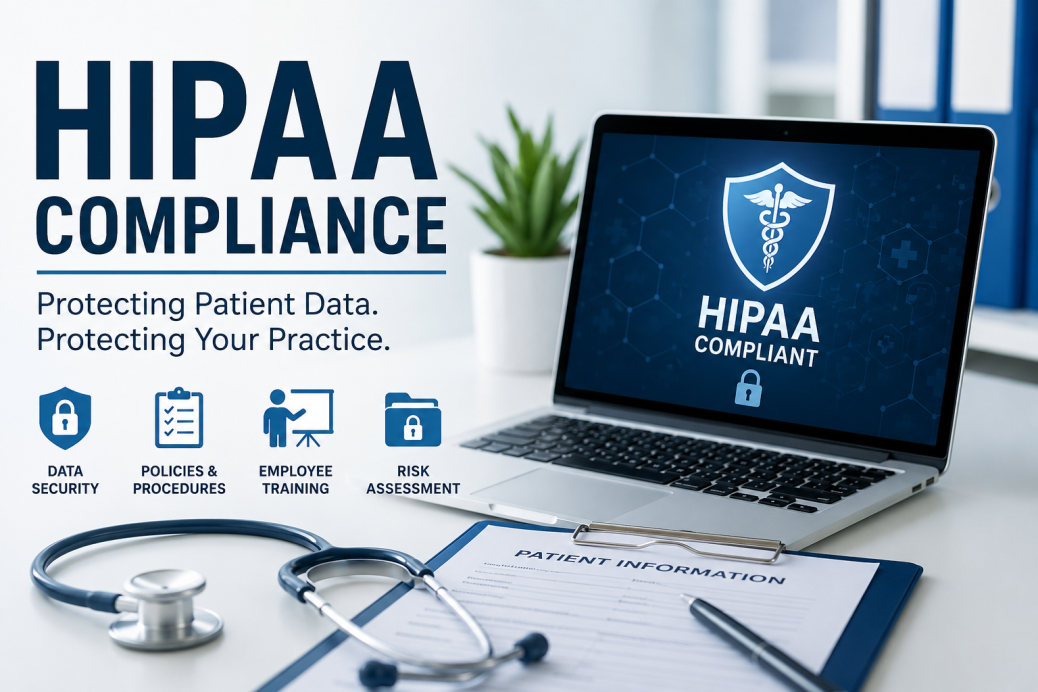
HIPAA compliance is often misunderstood. Many healthcare providers believe that because they have antivirus software, secure passwords, or a cloud provider, they are already compliant.
Unfortunately, HIPAA compliance is much more comprehensive than a few security tools. Misunderstanding the requirements can leave organizations vulnerable to data breaches, fines, and operational disruptions.
Let’s look at some of the most common HIPAA compliance myths and the reality behind them.
Myth #1: “We’re Too Small to Be Targeted”
Many small medical practices assume cybercriminals only target large hospitals and healthcare systems.
In reality, smaller healthcare organizations are frequently targeted because they often have fewer security resources and less mature cybersecurity programs.
Patient records contain valuable personal and financial information, making healthcare organizations attractive targets regardless of size.
Myth #2: “Our IT Provider Handles HIPAA Compliance”
Technology plays a major role in HIPAA compliance, but compliance is ultimately the responsibility of the healthcare organization itself.
An IT provider can help implement safeguards, monitor systems, and improve security, but healthcare practices must also maintain policies, employee training, risk assessments, and administrative controls.
HIPAA requires both technical and organizational measures.
Myth #3: “Using Microsoft 365 Makes Us HIPAA Compliant”
Microsoft 365 can support HIPAA compliance, but simply purchasing licenses does not make an organization compliant.
Healthcare organizations must properly configure security settings, implement access controls, enable auditing, manage data retention policies, and establish appropriate administrative procedures.
Technology alone is not enough.
Myth #4: “We’ve Never Had a Breach, So We’re Compliant”
Many organizations assume that because they have not experienced a security incident, their compliance efforts are sufficient.
HIPAA compliance is based on implementing reasonable safeguards and maintaining ongoing risk management practices. A lack of incidents does not necessarily indicate compliance.
Regular assessments help identify risks before they become breaches.
Myth #5: “HIPAA Compliance Is a One-Time Project”
Compliance is not something that can be completed and forgotten.
New employees join the organization, software changes, threats evolve, and regulations continue to develop. Maintaining compliance requires ongoing attention and regular reviews.
Organizations should routinely evaluate their security controls, policies, procedures, and training programs.
The Importance of a HIPAA Risk Assessment
One of the most important HIPAA requirements is conducting a risk assessment.
A proper assessment helps organizations:
- Identify security vulnerabilities
- Evaluate risks to patient data
- Prioritize remediation efforts
- Document compliance activities
- Strengthen cybersecurity defenses
Without a documented risk assessment, organizations may struggle to demonstrate compliance during an investigation or audit.
What Healthcare Organizations Should Focus on Today
A strong HIPAA compliance program typically includes:
- Risk assessments
- Multi-factor authentication
- Endpoint protection
- Employee security awareness training
- Data backup and disaster recovery planning
- Access controls and user management
- Security monitoring and incident response planning
- Regular policy and procedure reviews
These measures help protect both patient information and business operations.
How Affant Helps
Affant helps healthcare organizations strengthen security and support HIPAA compliance through risk assessments, cybersecurity services, employee training, secure Microsoft 365 configurations, backup and disaster recovery planning, and ongoing IT support.
Whether you’re preparing for a compliance review or simply want to reduce risk, Affant can help you build a practical and sustainable approach to protecting patient information and maintaining compliance.