
Outsourced IT has become the norm for small and mid-sized businesses. It’s efficient, scalable, and often more cost-effective than building an internal team. But not all outsourced IT is created equal.
A growing number of providers offer ultra-low-cost services by routing support overseas. On paper, the savings can look appealing. In practice, the tradeoffs often show up quickly—and usually at the worst possible time.
For businesses that rely on uptime, security, and fast decision-making, local, in-person IT support still holds a real advantage.
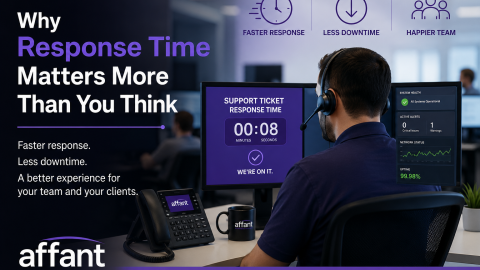
When Something Breaks, Time Matters
Every IT company promises fast response times. The difference is what happens after the ticket is opened.
With overseas support, troubleshooting is almost always remote, often scripted, and sometimes delayed by time zone gaps. Even simple issues can turn into long back-and-forth exchanges.
Local IT support works differently. When something critical goes down—server failure, network outage, hardware issues—you’re not waiting for escalation across continents. You have someone who can actually show up, diagnose the issue physically, and fix it faster.
That difference isn’t theoretical. It directly impacts downtime, lost revenue, and stress levels across your team.
Communication Isn’t Just About Language
Most offshore teams speak English well enough to get by. That’s not the issue.
The real gap tends to be context.
Local providers understand how your business operates, your urgency levels, and the nuance behind requests that don’t fit neatly into a script. There’s less friction, fewer misunderstandings, and a lot less repetition.
You’re not re-explaining your environment every time you call. You’re talking to someone who already knows it.
Security and Accountability Are Different When It’s Local
Cybersecurity is one area where “good enough” support doesn’t hold up.
When your IT provider is local, there’s a clearer chain of accountability. They’re operating under the same regulatory environment, the same legal exposure, and often working with other businesses in your area that have similar compliance needs.
With overseas support, enforcement and accountability can become murky. If something goes wrong—whether it’s a breach, misconfiguration, or missed alert—you may not have the same level of recourse or visibility.
For industries dealing with compliance frameworks like HIPAA or CMMC, that distinction matters more than most people realize.
Physical Infrastructure Still Exists
Even in cloud-heavy environments, businesses still rely on physical systems:
- Network racks
- Firewalls and switches
- Workstations and peripherals
- Office cabling and connectivity
When those systems fail, remote support has limits.
Local IT providers can step in directly, whether it’s replacing hardware, reconfiguring a network, or rebuilding infrastructure after a failure. That capability tends to get overlooked until it’s urgently needed.
The “Cheap” Option Isn’t Always Cheaper
Overseas IT support is often marketed around cost savings. And in some cases, it does reduce monthly spend.
But cost isn’t just what you pay on paper. It’s also:
- How long issues take to resolve
- How often problems repeat
- How much downtime impacts your business
- How secure your systems actually are
When you factor those in, the gap between “cheap” and “effective” narrows quickly.
Relationship vs. Transaction
One of the biggest differences comes down to how the service feels over time.
Overseas support tends to operate transactionally. You open a ticket, it gets processed, and that’s the end of the interaction.
Local IT support is more relationship-driven. Over time, your provider becomes familiar with your systems, your team, and your long-term goals. That leads to better recommendations, fewer recurring issues, and more proactive planning.
Instead of reacting to problems, you start preventing them.
Where Affant Fits In
At Affant, the focus has always been on providing real support from a real team. Not scripts, not handoffs across time zones, and not generic advice.
That means:
- Engineers who understand your environment
- Direct access to people who can make decisions
- On-site support when it actually matters
- 24/7 availability from a team you can reach
Outsourcing IT can absolutely be the right move for a growing business. The key is choosing a model that actually supports how your business operates day to day.
Because when something goes wrong, the difference between remote-only support and local, hands-on expertise becomes very clear, very quickly.